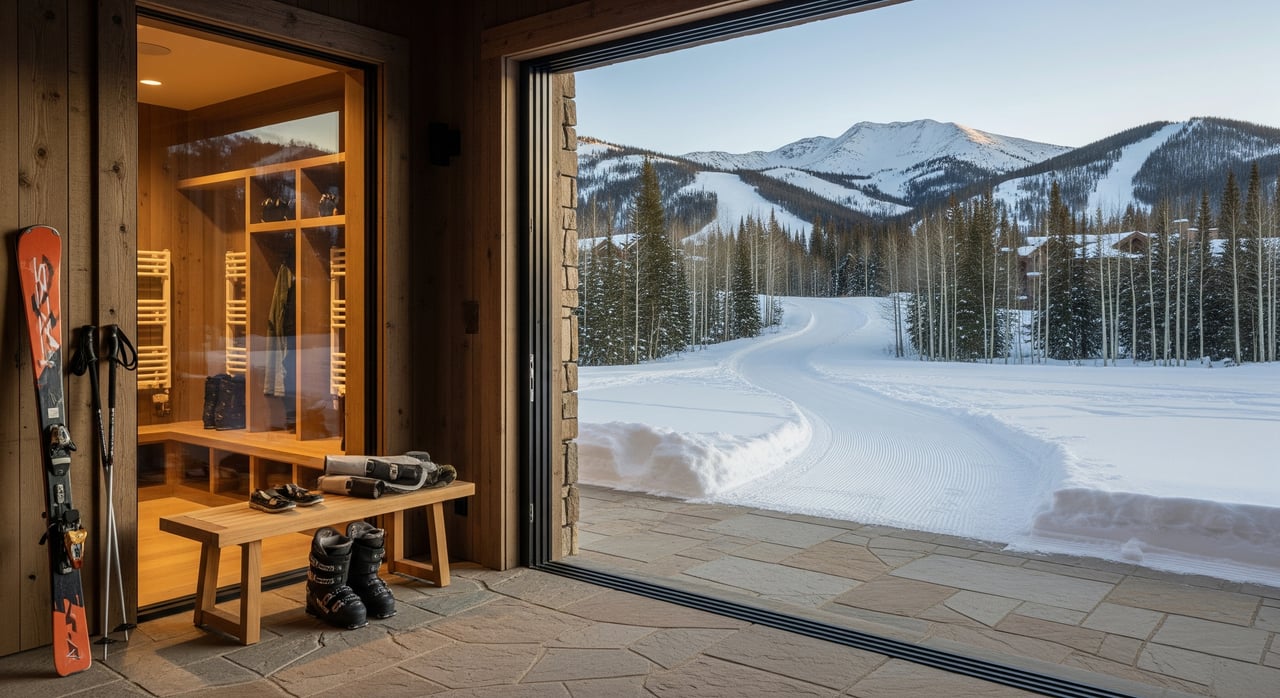
Ever see a listing call itself “ski-in/ski-out” and wonder what that really means in Steamboat? You are not alone. In the Mountain Area, small differences in access can change your daily routine, your ownership costs, and your rental performance. In this guide, you will learn the key access types, how they map to Steamboat’s neighborhoods, what trade-offs to expect, and a practical checklist to verify each property. Let’s dive in.
Ski access terms, clearly defined
True ski-in/ski-out
You can step out the door and glide onto a maintained run or skiway that leads to a lift, without crossing a road or needing a vehicle. Buildings often have ski lockers or boot rooms that open directly to the slope. This is the most convenient winter access and usually the rarest and most premium.
Ski-on/ski-off
This is often used in marketing to describe near-slope access with a very short, safe walk or signed crossing to reach a groomed skiway or lift area. Think 30 to 120 seconds on foot, depending on conditions. It feels close to slopeside, but it may not be “door-to-snow.”
Walk-to-lift
You can walk to the base area or gondola within a few minutes. The exact time varies with terrain and snow, often 5 to 15 minutes. Paths are usually plowed, but you will carry your gear and may have small inclines.
Shuttle-served
You ride a resort or HOA shuttle to the base. Service is frequent in peak season and works well for many owners and renters. It is typically better value per square foot than slopeside, with a little more planning around schedules.
Drive-to skiing
You drive to the base each day. This offers the widest range of homes and privacy, often with the lowest price premium for ski access. You will manage parking and snow.
How this maps to Steamboat’s Mountain Area
Base area and village condos
These buildings cluster around the gondola and village plazas. Many offer true ski-in/ski-out or very short ski-on/ski-off access with on-site ski storage. Expect premium pricing, higher HOA or resort fees, and lively winter and summer foot traffic.
Townhomes and mountain-adjacent flats
These communities sit just off the primary slopes. Some have gated skiways or short groomed paths. Many are walk-to-lift with quick access to the base. You gain more privacy than a large base condo, with varying views and some road-facing units.
Single-family slopeside homes
A few homes back to ski easements or trails. True ski-in homes are rare and command a premium. You get more space and privacy, with winter logistics to plan for, such as driveway grade and snow removal.
Shuttle-oriented neighborhoods and complexes
Slightly farther from the base, these areas lean on frequent HOA or resort shuttles. They often deliver strong value and good rental options. Your day is simple, but you rely on shuttle schedules and winter road conditions.
Fractional and hotel-style options
Often set in the base or village core with easy access and professional management. These can fit an income or turn-key use strategy. Check HOA rental rules and owner use calendars to match your goals.
What “Green Zone” might mean
The term “Green Zone” is not a single formal, countywide designation in Routt County. In practice, you may see it used to describe one of three ideas. It can signal proximity to beginner-friendly green runs, shorthand for the easiest-access core near the gondola, or internal branding tied to a specific development or brokerage. If you see “Green Zone” in a listing, ask for a precise definition and verify with trail maps, HOA documents, or recorded access.
Price and amenity trade-offs
- Convenience vs. privacy: Slopeside access is unbeatable for first tracks, but it comes with more public activity. Farther out, you gain space and quiet.
- Cost of ownership: Closer-in buildings often carry higher HOA or resort assessments and stronger rental demand, along with higher management and turnover costs.
- Rental income vs. personal use: Base-area and professionally managed condos can achieve higher nightly rates and occupancy. Verify rental rules and any blackout dates.
- Year-round practicality: Steeper driveways and limited summer access can affect daily living. Factor in vehicles, plowing, and storage.
- Maintenance exposure: Slope-adjacent properties can have more noise from grooming and skier traffic. Off-slope homes often require robust snow plans.
Safety, snow, and operations to consider
- Avalanche and terrain: The resort manages control work on designated ski terrain. If a property sits near steep gullies or forested slopes, request hazard disclosures and consider professional evaluation.
- Easements and skiways: Some homes and buildings have recorded ski easements or dedicated skiways. Confirm whether access is formal and maintained.
- Roads and crossings: Needing to cross a plowed road can change a “true ski-out” claim. Ask how crossings are managed in storms.
- Storage and parking: Ski lockers, heated boot rooms, and assigned parking make day-to-day life easier. Check locations and elevator access.
Property types at a glance
- Base-area condos: Highest chance of true ski-in/ski-out. Expect premium location and fees, plus a lively village feel.
- Mountain townhomes: Often ski-on/ski-off or walk-to-lift. More privacy and space, with quick access.
- Slopeside single-family homes: Rare gems with exceptional convenience and strong pricing power. Plan for winter logistics.
- Shuttle-served condos and homes: Great value with reliable access. Excellent fit for many second-home and rental strategies.
- Fractional or hotel-style: Simplified ownership with easy access. Review usage calendars and rental policies.
Your buyer checklist for Steamboat
On-site access and logistics
- Can you ski out directly to a marked run or maintained skiway, without crossing a road?
- Where are ski lockers or boot rooms, and how close are they to the exit?
- What is the walking time and elevation change to the nearest lift or gondola?
- Who plows and maintains pedestrian routes, stairs, and driveways in winter?
Legal, HOA, and title
- Are there recorded ski easements or written access agreements? Ask for documents and maps.
- What do HOA covenants say about shuttles, nightly rentals, and owner blackout dates?
- Are special assessments planned for mountain infrastructure that could affect dues?
Operations and safety
- Who manages avalanche mitigation in the immediate area, and are there hazard disclosures?
- How are trash, deliveries, and guest drop-off handled during storms?
- What are parking rules, including garage, assigned spaces, and overflow?
Financials and lifestyle fit
- Review 12 months of HOA financials, reserve studies, and a dues breakdown for utilities, shuttle, snow removal, and insurance.
- If you plan to rent, request rental history or comps for occupancy and nightly rates.
- Assess seasonal access. Do you need 4WD, and how steep is the drive?
Verification steps
- Tour in peak winter conditions to test ski routes, walking times, and shuttle frequency.
- Order a title search to locate easements and rights of way, and review county GIS for parcel details.
- If ski access depends on a shared skiway or crossing, consider a survey and written confirmation of access rules.
How to choose your best fit
Start with how you plan to use the home. If first-chair mornings and kid-friendly returns are top priorities, target true ski-in/ski-out or ski-on/ski-off. If space, quiet, and value matter more, look at shuttle-served homes and townhomes within a quick ride. If you want both access and income, focus on base-area condos with strong management and clear rental policies. Then pressure-test the short list in real winter conditions to confirm the daily routine you want.
Ready for a precise short list?
You deserve clear answers on access, easements, and lifestyle. Our team pairs neighborhood-level insight with careful verification, so you know exactly what you are buying. If you are weighing slopeside convenience against privacy, or rental potential against ownership costs, we will help you model the trade-offs and secure the right fit. Schedule a private tour and a tailored comparison of top options with The Vanatta Group.
FAQs
What does “true ski-in/ski-out” mean in Steamboat?
- It means you can step out and glide onto a maintained run or skiway that leads to a lift, without crossing a road or using a vehicle.
How far is “walk-to-lift” considered in winter conditions?
- Many buyers treat 5 to 15 minutes on plowed paths as walkable, but terrain and snow can change that feel, so time it yourself in-season.
Are slopeside single-family homes common in Steamboat?
- They are rare compared to condos and townhomes, and they tend to command a premium because of limited supply.
What is the “Green Zone” around the gondola?
- It is not a formal countywide designation; it is often used informally to describe very easy access near the base or beginner terrain, so ask for specifics.
Do shuttle-served properties rent well near Steamboat Resort?
- Many do, especially with frequent service in peak season, but performance depends on HOA rules, management, and location, so request rental history or comps.
What should I verify before offering on a ski-access home?
- Confirm recorded easements, winter maintenance responsibilities, actual walking times, storage and parking, shuttle schedules, and any planned assessments.