If you are considering a home at Lake Catamount, it helps to know that you are not just buying a house near the water. You are stepping into a private, layered community structure with distinct property types, shared governance, and separate rules around club access. When you understand those moving parts early, you can make a more confident decision and avoid surprises during due diligence. Let’s dive in.
Lake Catamount is not a typical lake neighborhood
Lake Catamount sits a few miles south of Steamboat Springs in unincorporated Routt County. County appraisal material places it in the Pleasant Valley area, about five miles south of Steamboat’s southern boundary, with surrounding subdivisions that have exclusive access to the lake.
What makes this community different is its structure. Lake Catamount operates more like a private club enclave built around a lake than a conventional public-lake neighborhood. For you as a buyer, that means access, fees, and governance may look very different from what you would expect in a standard waterfront subdivision.
Community layout shapes the ownership experience
The Catamount Metro District divides the community into two main areas: the Ranch and the Lake. The Ranch includes 25 residential lots around the golf course, while the Lake includes 22 cabins, 11 cottage residential lots, 40 large residential lots, and the club amenities around Lake Catamount.
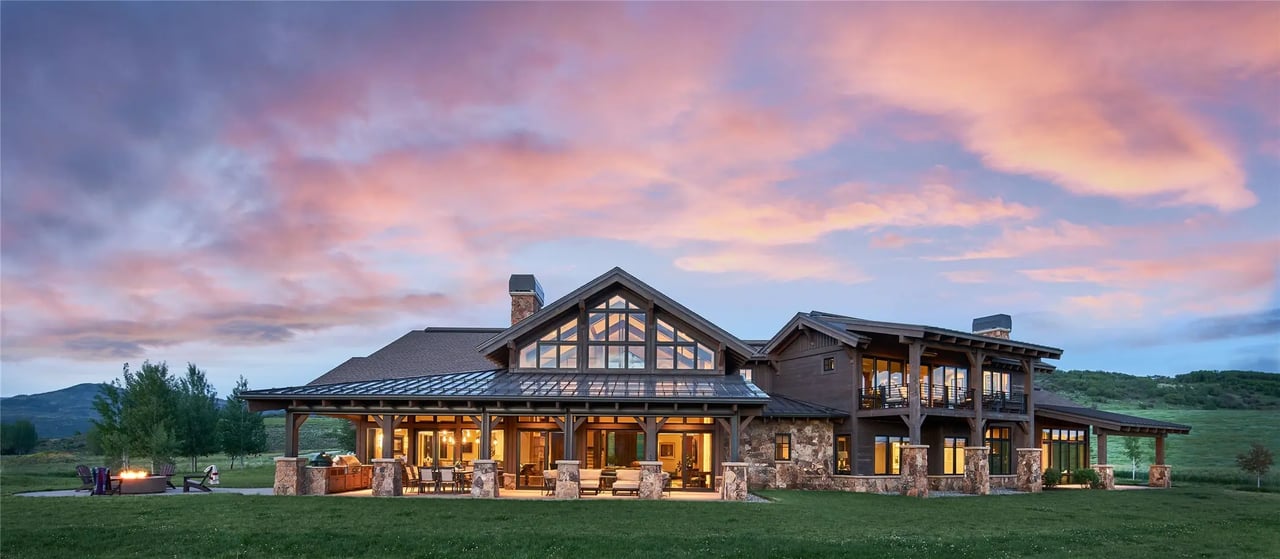
That mix matters because the community is not one uniform product. You may be looking at a cabin, a cottage lot, a large lake-area homesite, or a ranch-area property near the golf course. Each can come with a different setting, ownership profile, and practical use case.
Governance is layered, not simple
One of the most important things to understand is that Lake Catamount is governed by more than a single HOA. The governing documents broadly define the development to include the Metro District, the Club, CROA, the Cabins and Cottages Association, and private owners.
The Metro District itself is a quasi-municipal corporation and political subdivision of Colorado. In practical terms, that means your ownership experience may involve multiple entities, multiple meetings, and multiple categories of fees or rules, rather than one central neighborhood contact.
Who manages what
The Metro District manages key infrastructure and services, including:
- Roads
- Water treatment and distribution
- Sanitary sewer collection and treatment at the Lake
- The dam
Its water system is metered and billed quarterly, and the district publishes separate annual assessments and utility fees. That is an important distinction for buyers comparing Lake Catamount to neighborhoods with a more traditional all-in HOA structure.
What boards and review processes to expect
CROA board meetings are held quarterly as needed. The Design Review Board meets on the first Tuesday of each month, and the Metro District board also meets publicly on a quarterly schedule.
For you, this signals an ownership environment with active oversight. If you are planning a remodel, landscaping work, or a new build, it is wise to understand approval timelines and design expectations before you close.
Club access does not automatically come with ownership
This is one of the biggest points of confusion for buyers. Owning property at Lake Catamount does not automatically mean you receive club membership.
The club currently offers Premier and Junior Premier memberships. Lake membership is sold out and on a buyer waitlist, and the 2024 annual meeting reported a 20-person waitlist for Lake membership.
That means you should never assume a property purchase includes immediate access to a specific membership category. Before you move forward, you will want clarity on what, if anything, transfers with the property and whether a waitlist applies.
What current membership categories include
According to current club materials:
- Premier and Junior Premier memberships include both lake and golf privileges
- Lake membership includes lake amenities, the golf practice facility, and club restaurants, but not golf tee times
This distinction matters if your vision of ownership includes regular golf access, lake recreation, or use of social amenities. The details affect both lifestyle fit and long-term value.
Lake use is private and structured
Lake Catamount is not set up as an open-access public waterfront. The rules make clear that the development is private property, and that private amenities are reserved for members, owners, and authorized guests.
There is a narrow public exception for dining and special events, but overall the community functions under a private-use model. If you are drawn to the lake itself, this is essential to understand before you buy.
What non-club owners should know
Even without club membership, owners still have limited access to Lake Catamount through their own property and Metro District property. If you need to use the boat ramp, you must contact the Director of Lake Operations.
Fishing and other recreation are managed through the Outfitter Center and reservation systems. So while ownership may provide some lake-related use, it does not create unlimited access to every amenity or activity.
Amenities associated with membership
Club materials market a broad set of member amenities at the Lake House, including:
- Fitness center
- Tennis courts
- Swimming and wading areas
- Spa pools
- Restaurant
- Seasonal Nordic skiing and snowshoeing on the trails
If those amenities are a major part of your purchase decision, membership availability should be part of your due diligence from the start.
Rules and stewardship are part of ownership
Lake Catamount has an active management culture, and that can be a positive for buyers who value consistency and long-term care. The 2024 annual minutes show attention to wildfire mitigation, dock and landscaping guideline updates, cluster mailbox enclosures, lake weed harvesting, and other capital projects.
That level of stewardship often supports the community’s overall environment and infrastructure, but it also means ownership comes with coordination and ongoing expectations. You should go in prepared for a community where rules are visible and actively managed.
Daily-use rules to keep in mind
The Metro District rules include detailed lifestyle controls such as:
- Pet leash requirements
- Private road rules
- A 25 mph speed limit
- A no-wake zone at the south end of the lake
- A 200-foot no-boats and no-people buffer around the dam
These are not unusual in a private mountain community, but they do shape the day-to-day ownership experience. For many buyers, the key is not whether rules exist, but whether the rules match how they plan to use the property.
Property types are varied and site-specific
Another important point is that Lake Catamount is not defined by one home style. Official district materials describe cabins, cottage lots, and larger residential lots, while 2024 meeting minutes reference cabins, cottages, lake lots, ranch lots, and active construction and landscaping projects.
That tells you the housing stock is more custom and site-specific than uniform. If you are comparing listings, it helps to evaluate each property on its own setting, access, views, improvement level, and relationship to the lake, golf course, or open land.
The setting is about more than the water
Lake Catamount appeals to many buyers because of its broader mountain setting. County material emphasizes rolling terrain, wide-open views, and nearby ranch and agricultural character.
Club materials also stress conservation easements and preservation of the open landscape. In other words, many buyers are drawn to Catamount not simply for waterfront living, but for privacy, scenery, and the feeling of being in a protected high-country environment close to Steamboat Springs.
What to ask before you buy at Lake Catamount
Because this is a layered community, the right questions matter. A careful buyer should confirm not only the property details, but also the use rights and obligations attached to the address.
Here are some of the most important questions to ask during your search:
- What exact property type am I buying: cabin, cottage lot, large residential lot, or ranch-area property?
- What lake access comes with the property itself?
- Does any club access transfer with the sale?
- If club access does not transfer, what memberships are currently available?
- Is there a waitlist for the membership level I want?
- What annual assessments, utility charges, and district fees apply?
- Which design review or community approvals would affect future improvements?
- What rules govern lake use, trails, roads, pets, and guest access?
Why local guidance matters here
In a community like Lake Catamount, details matter. The difference between a property with immediate lifestyle alignment and one with hidden friction often comes down to understanding governance, membership, and use rights before you go under contract.
That is especially true in a market like Steamboat Springs, where high-value properties often sell on a blend of setting, privacy, amenities, and long-term enjoyment. A thoughtful review of the documents and community structure can help you evaluate the opportunity with clear eyes.
If you are considering a purchase at Lake Catamount or comparing it to other luxury communities in Routt County, The Vanatta Group can help you assess the details, understand the tradeoffs, and move forward with confidence.
FAQs
What should buyers know about Lake Catamount governance?
- Lake Catamount has layered governance that includes the Metro District, the Club, CROA, the Cabins and Cottages Association, and private owners, so buyers should expect more than a single HOA relationship.
Does buying a Lake Catamount home include club membership?
- No. Property ownership does not automatically include club membership, and some membership categories may be waitlisted.
What types of homes are available at Lake Catamount?
- The community includes cabins, cottage lots, larger residential lots, and ranch-area lots, which creates a more custom and varied housing mix.
Can non-club owners use Lake Catamount amenities?
- Non-club owners have limited access through their own property and Metro District property, but use of certain facilities and recreation is managed through community rules and reservation systems.
What services does the Catamount Metro District provide?
- The Metro District manages roads, water treatment and distribution, sanitary sewer collection and treatment at the Lake, and the dam, with separate assessments and utility billing.
Why is Lake Catamount different from other Steamboat-area lake communities?
- It functions more like a private club community built around a lake, with layered governance, private-use rules, and separate membership access rather than simple public-style waterfront living.